Despite the market being in an intense bear market since last year, crypto neobanks have remained slightly disconnected from the broader market and continued to experience exceptional growth.
In 2025 alone, stablecoins, which fuel crypto neobanks, were up over 50% in volume compared to traditional payment processors like Visa. Their biggest component, crypto cards, surged from approximately $100 million monthly in early 2023 to over $1.5 billion by late 2025, according to Artemis data.
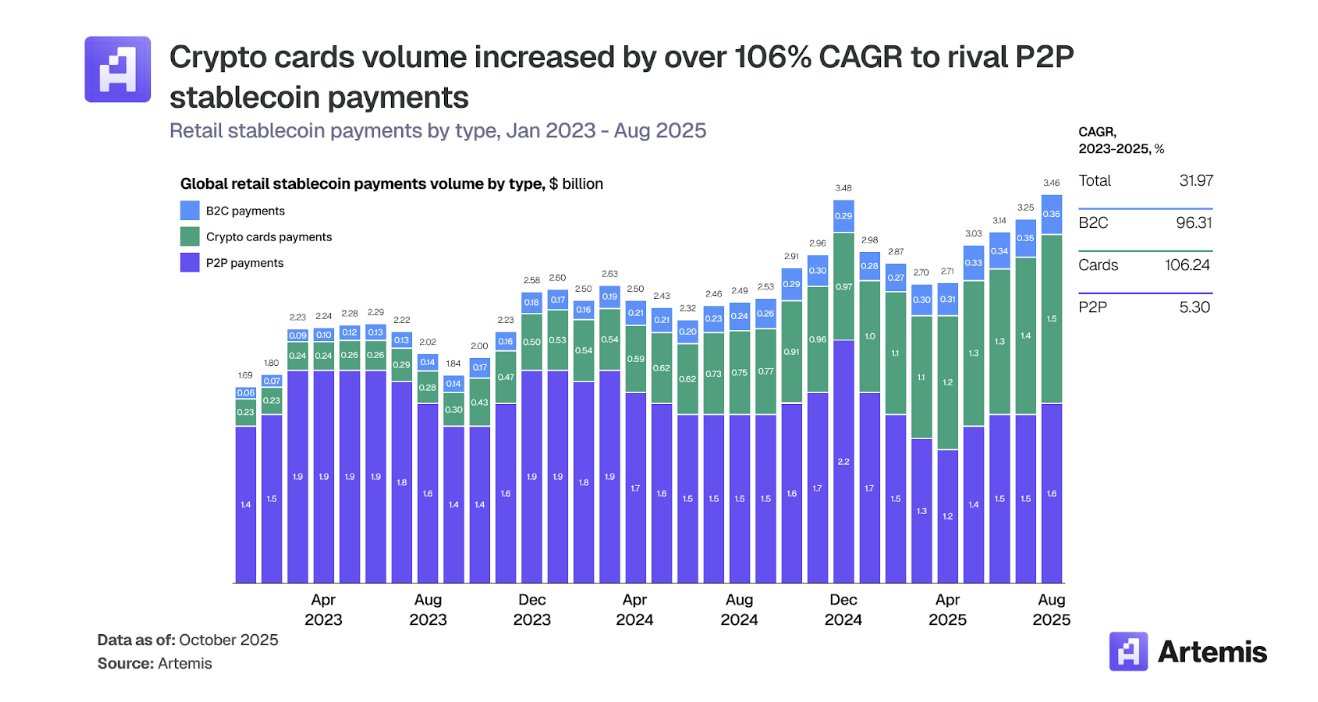
With industry leaders like RedotPay, Ether.fi, and Kast driving most of the volume right now, we’ve already got over 300+ crypto cards tracked by Jointodey, with even more sitting in waitlists ready to launch.
And this isn’t another speculative tool created by crypto. Crypto neobanks offer a real edge vs traditional counterparts in terms of fees, faster transactions, and global accessibility.
For instance, if you want to manage an international account like USD or EUR with traditional fintechs, you pay absurd fees like deposit fees, withdrawal fees, and sometimes even lose a huge chunk of the money when initiating transfers. With crypto neobanks, you pay near-zero fees for most of these things, and it’s already being used for real-time payments.
A full-stack crypto neobank usually offers users these 4 components:
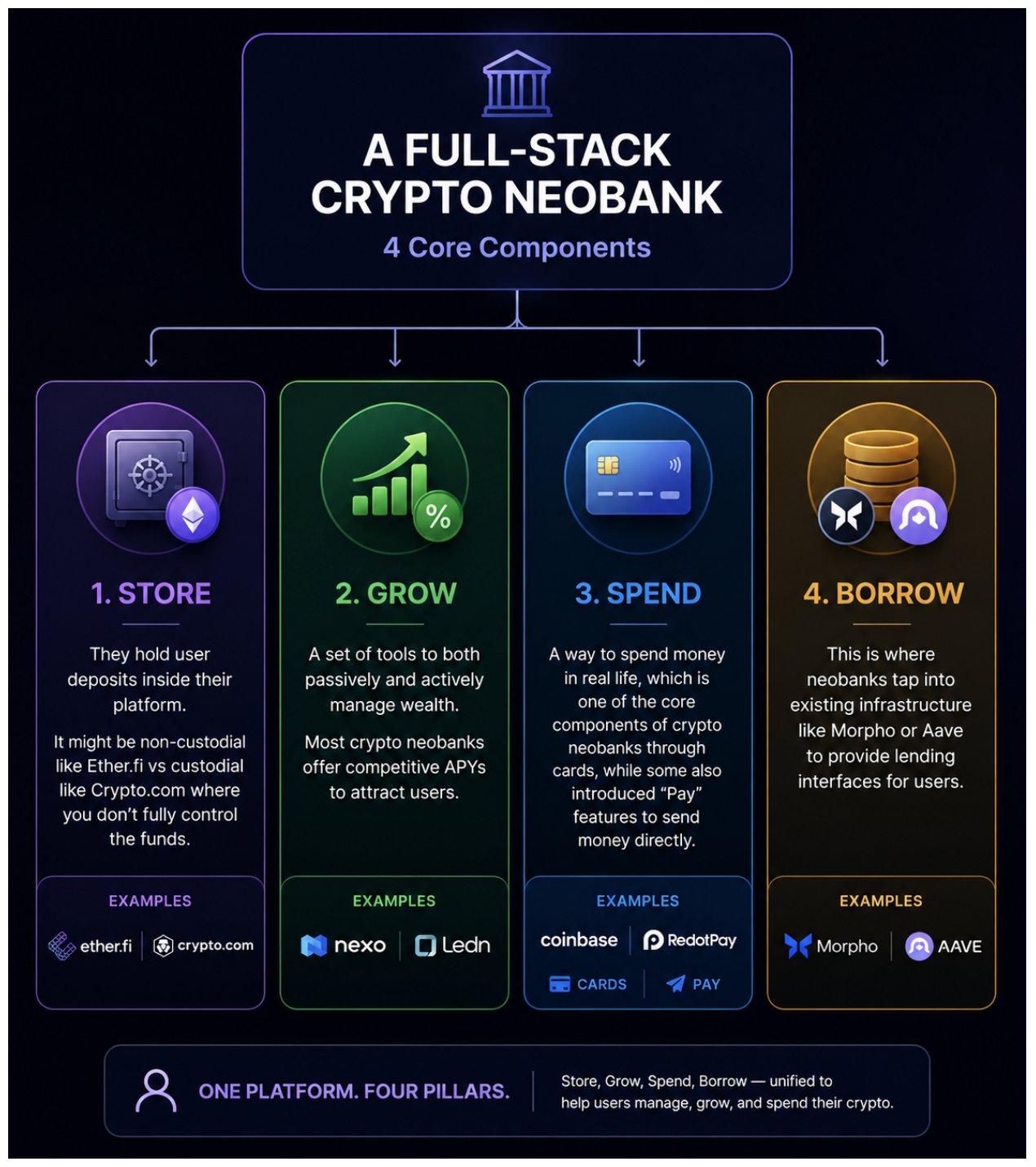
• Store: they hold user deposits inside their platform. It might be non-custodial like Ether.fi vs custodial like Crypto.com where you don’t fully control the funds.
• Grow: a set of tools to both passively and actively manage wealth. Most crypto neobanks offer competitive APYs to attract users.
• Spend: a way to spend money in real life, which is one of the core components of crypto neobanks through cards, while some also introduced “Pay” features to send money directly.
• Borrow: this is where neobanks tap into existing infrastructure like Morpho or Aave to provide lending interfaces for users.
Most neobanks currently offering borrowing services for customers, like Ether.fi, adopt an overcollateralized model based on the infrastructure they integrate with.
You spend fiat → your original crypto stays untouched in the vault (still earning yield) → a debt position is created against it.
It’s basically “Aave in your pocket” — every purchase in Borrow Mode creates an on-chain borrow position instantly.
While this works well for whales with 6-fig portfolios, it leaves a very thin lane for everyday users like crypto traders and freelancers to access credit because it’s not capital efficient.
There’s also a high opportunity cost — your collateral either earns less or stays locked, and since it’s leverage on top of leverage, sharp market drops can trigger forced liquidations at terrible prices.
Most people who’ll eventually convert to crypto neobanks are gig workers frustrated with the current banking system, and crypto neobanks directly solve many of their pain points.
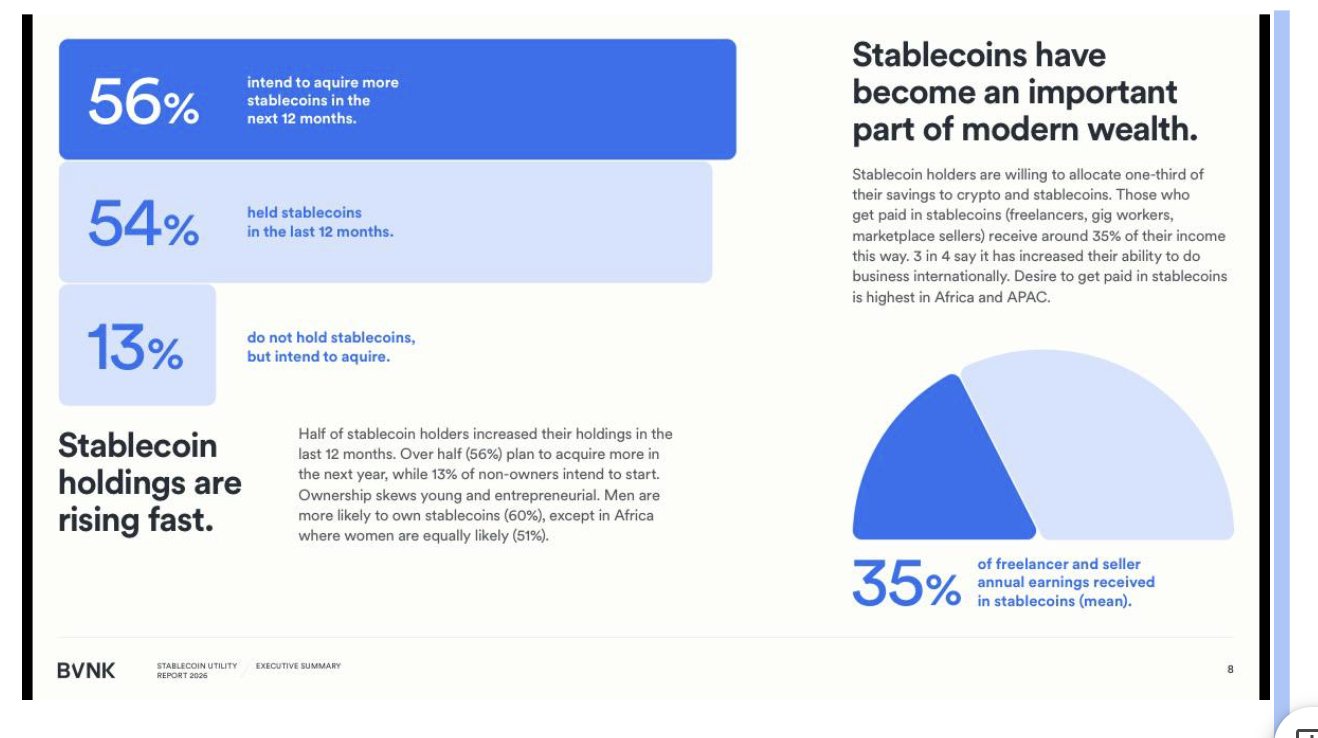
According to BVNK, by 2026 over 35% of freelancers received part of their annual earnings in stablecoins. Now imagine what that number looks like once crypto neobank adoption accelerates.
The gig economy market is projected to be worth over $2 trillion by 2035 because it gives people opportunities to earn extra income outside traditional jobs from university students to people already working full-time. It also offers more globally competitive wages paid online, which means more people will eventually become freelancers.

The problem right now is that crypto neobanks already have the infrastructure to onboard the next generation of users, but still haven’t fully figured out how to provide credit services to this segment without requiring crypto as collateral.
That’s where unsecured credit comes in.
An unsecured loan is a loan you get without putting up collateral like a house or car. Instead, lenders rely more on your income, repayment history, cash flow, and for freelancers specifically — proof of earnings from platforms like YouTube, Shopify, Upwork, and others.
With this, freelancers get access to credit without needing to already own large amounts of crypto. That way crypto neobanks provide one of the biggest utilities possible to one of the core user bases of their ecosystem.
Crypto neobanks are perfectly positioned for this because they already have the distribution. People already save, spend, and grow balances with them. If users could also access credit lines without friction, it would massively increase retention and platform usage.
And the shift already started.
Some of the biggest global fintech companies are ramping up revenue through unsecured lending services while traditional bank borrowing is becoming less attractive because of:
• higher interest rates
• tighter underwriting standards
• inflation is squeezing consumers
• banks becoming more risk-averse after rising delinquencies
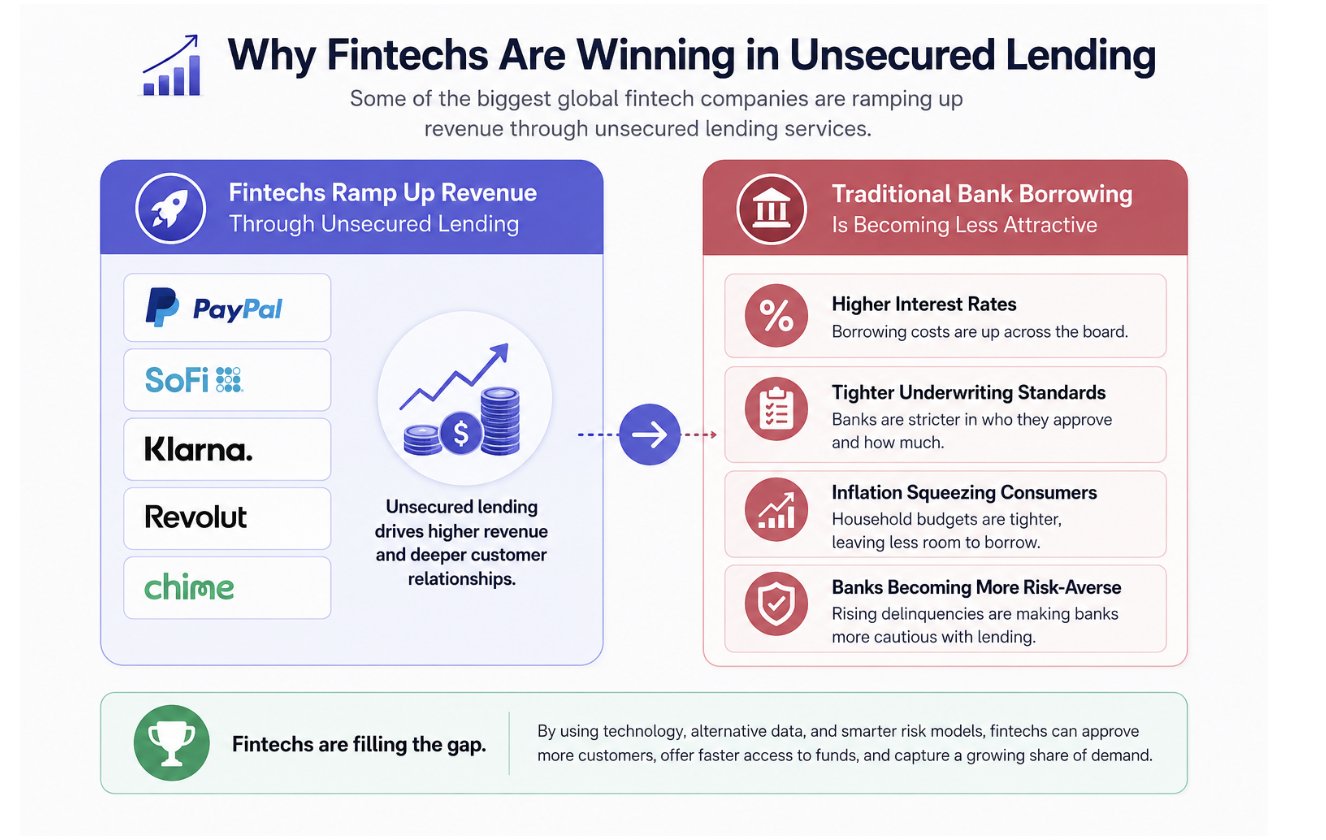
Some fintech companies have already found massive success offering unsecured lending.
- Revolut scaled unsecured lending as part of its neobank model. In 2025 its customer lending portfolio grew 120% YoY to $2.9bn, consisting mainly of unsecured personal loans and credit cards. This helped contribute to the company’s fifth straight year of profitability with over $6bn in revenue.
- In Q1 2026, SoFi’s total net revenue reached $1.1bn, up from $771.8m a year earlier, driven largely by higher interest income from unsecured loans.
We have many other examples too like Nubank, Klarna, Monzo, and Varo being among the fintechs building successful businesses around unsecured lending for customers.
Apart from being a high-margin revenue engine as shown from the fintech examples above, unsecured lending also helps neobanks with customer retention.
Customers who borrow money from an app tend to open it more often, and it gets even stronger when they start using it for most of their transactions to build a credit profile for future loans. It turns one-time users into highly engaged customers.
Users get access to no-collateral loans with speed and convenience, plus the ability to build credit with a far better experience than most traditional financial alternatives, while the platform generates revenue through interest payments. It creates a win-win situation for both sides.
This is also a very strong feature for neobanks targeting underserved regions where there’s a huge unbanked or underbanked population.
Africa is a perfect example.
Nigeria already one of the biggest crypto hubs globally has fintech companies like FairMoney and Branch already offering similar lending services. Add that to the fact that crypto adoption in the region is among the highest globally because of remittances, trading, and stablecoin usage, and the opportunity becomes massive.
Now imagine a crypto neobank offering unsecured credit directly to these users.
But for crypto neobanks to offer these services properly, they need infrastructure that can verify the income of gig workers, creators, and digital nomads before extending credit.
That’s where @cr3dentials comes in.
Instead of every project building this infrastructure from scratch, they can tap into our zkTLS-powered verification infrastructure specifically designed for credit and lending use cases.
With zkTLS, users can verify real-world income, cash flow, or reputation from digital sources like bank portals, gig platforms, creator dashboards, and payment processors without handing over logins, screenshots, or raw sensitive data.
The user’s actual financial details stay private, and no direct API integrations are needed from the data sources.
Neobanks can currently verify customer earnings from platforms like Upwork, Stripe, Uber, YouTube, and Shopify, with more integrations expected in the future.
We recently partnered with Kasi Money to verify income for drivers earning through platforms like Uber, Bolt, and other ride-hailing apps, and more to come.
In Pantera’s blog post about building permissionless neobanks, they specifically highlighted unsecured credit as one of the biggest opportunities for crypto neobanks to build around:
“Undercollateralized lending and consumer credit are perhaps the holy grail of crypto neobanks.”
That statement alone shows where the industry is heading.
Crypto already solved global transfers, stablecoin payments, and even yield generation. But the next real unlock is giving users access to credit without forcing them to overcollateralize with crypto assets first.
Because at the end of the day, most normal users don’t have a large crypto portfolio sitting around to borrow against.
They just have income, cash flow, online earnings, and digital reputations spread across platforms like Upwork, Uber, Stripe, Shopify, or YouTube.
The infrastructure that can verify those income sources privately and reliably will likely become one of the most important layers powering the next generation of crypto neobanks.
If you’re building unsecured credit using stablecoin rails
We want to work with you.
DM us 🫵