The global digital economy of platform earners (gig workers, creators, and online sellers) is worth roughly $800 billion today and is projected to cross $2 trillion by 2032.
In the US alone, nearly 40% of the workforce consists of independent workers, which roughly translates to 58 million people, according to a McKinsey study in 2022.
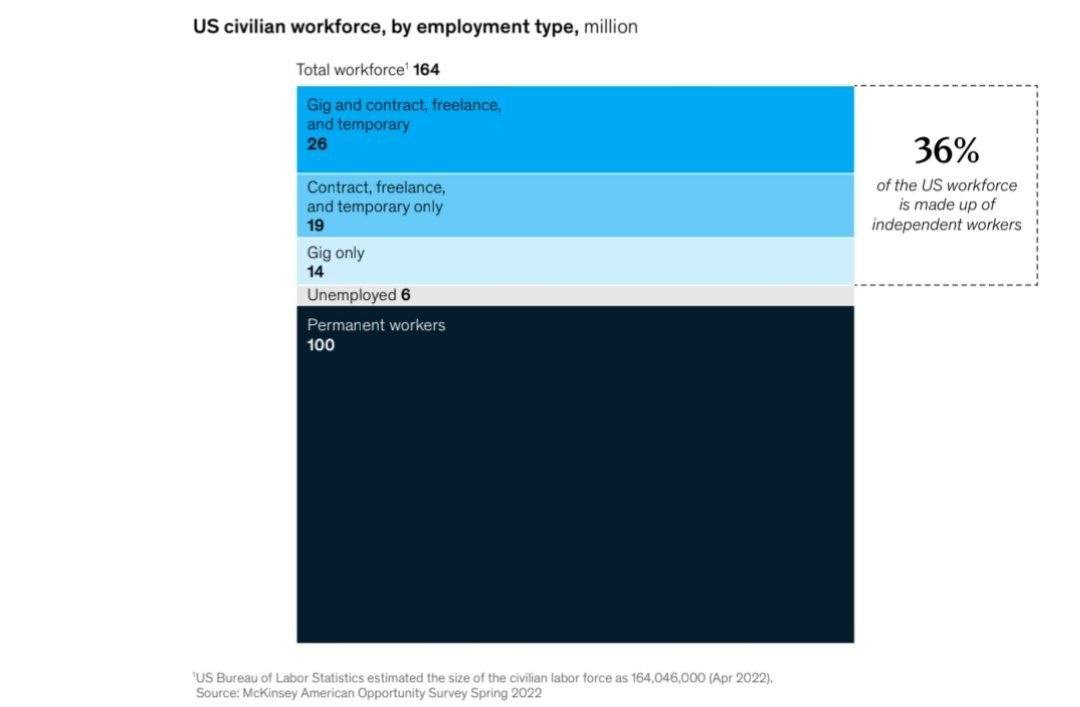
The proliferation of the gig economy has its roots in the fact that traditional employment failed workers and they needed alternative ways to provide for their families, which is exactly what the gig economy offered.
The modern gig economy was born at the bottom of the 2008 financial crisis, when US unemployment peaked at 10%, which is exactly when some of the biggest names in the industry were founded. For instance, Uber was founded in 2009.
The timing wasn’t a coincidence.
Millions of Americans desperately needed income to survive the crisis. There wasn’t enough demand, so people started monetizing what they already owned cars, houses, and spare time.
With Uber, you could make money with your car and get paid almost immediately.
The same thing happened during COVID-19.
As millions of jobs disappeared almost overnight because people were forced to stay home, screen time skyrocketed.
Platforms like TikTok, YouTube, and Shopify saw an insane influx of new users, which naturally meant more independent creators, freelancers, and online sellers earning income from these platforms.
People started monetizing their skills, opinions, and audiences to balance the changing economy.
Even Goldman Sachs acknowledged this explosion in the creator economy during the pandemic and noted that the industry continued growing afterward.
They estimated the creator economy alone could reach $480 billion by 2027.
The analysts also estimate there are currently around 50 million creators worldwide.
About 4% (roughly 2 million people) are considered professionals, earning an average annual income of around $100,000.
Being a professional here doesn’t necessarily mean you’ve spent years in college.
As long as you understand how social media works, have the experience, and can consistently create something valuable, you’re a professional.
McKinsey, in a study, asked people why they engaged in gig work.

Around 50% said:
- It’s out of necessity to support their family’s needs, meaning their existing job doesn’t pay enough.
- For the flexibility it offers.
The rest simply enjoy the work, while others do it for additional income.
But here’s what I think are the real reasons people become gig workers:
- Flexibility: Unlike traditional jobs where you can’t choose your own time or rate, the gig economy lets you decide when, where, and how much you work.
- Independence: Unlike a 9–5, you have full control of your time with nobody bossing you around.
- Higher earning potential: In many cases, gig workers earn more than traditional employees, especially during periods of high demand.
While this has been beneficial for workers and has helped governments absorb unemployment, the US unemployment chart tells an interesting story.
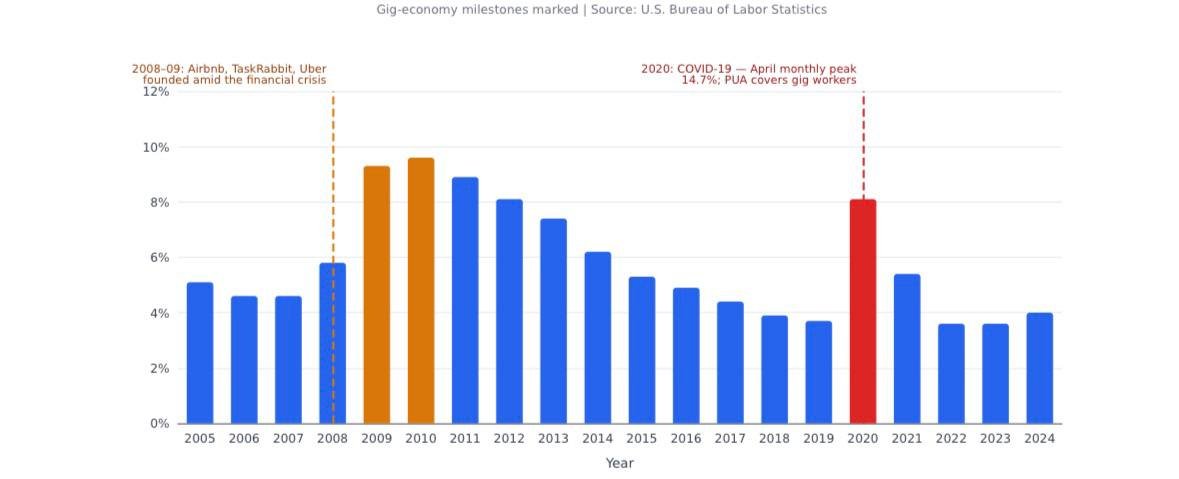
Almost every spike in unemployment sits alongside an expansion in gig work.
But being a gig worker also comes with trade-offs.
Unlike traditional W-2 employees, who have access to health insurance, unemployment insurance, workers’ compensation, paid leave, and retirement benefits through their employers, gig workers sit outside that system by design.
Once a gig worker gets paid, there’s little financial protection.
If they suddenly need money, they either have to find more work or go without.
With the proliferation of the internet, over 90% of Americans now own some kind of smartphone, and most of the largest gig platforms operate entirely online.
While traditional finance failed to provide these workers with enough support, online banking started filling that gap.
Companies like Revolut, SoFi, and Chime now offer unsecured credit to many of these users, allowing them to borrow without putting up collateral.
I think this trend will continue.
According to the American Bankers Association, nearly half of Americans now use mobile banking apps for their financial transactions.
A large portion of that growth comes from younger generations, many of whom also participate in the gig economy.
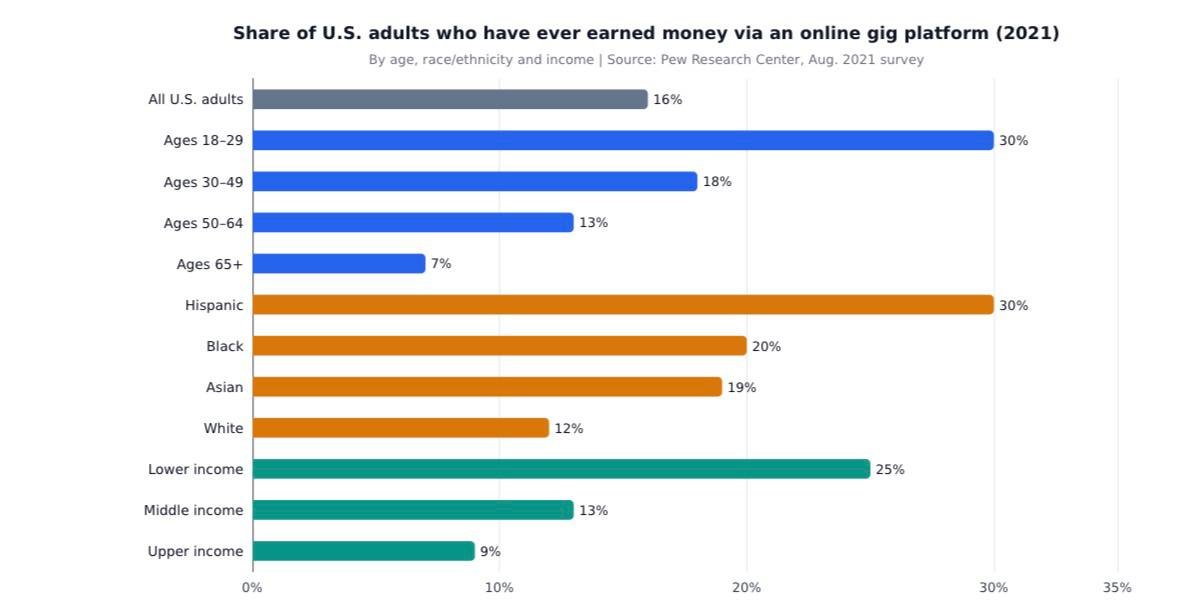
It tells you how younger people are becoming more interested in earning independently rather than relying solely on traditional 9–5 jobs.
As online work continues growing, unsecured credit will become one of the most important financial products for gig workers.
They don’t need collateral.
Lenders simply evaluate their earnings history and repayment ability to determine how much credit they can responsibly offer.
While traditional fintech companies are already generating huge revenue from unsecured lending, crypto neobanks are still trapped inside the crypto bubble.
Most of them are focused on cards while pretending they’re building for everyone.
Meanwhile, a huge portion of their potential audience are gig workers earning from platforms across the internet still can’t rely on them for financial advances the way they can with companies like Revolut or SoFi.
If crypto neobanks want to escape the cycle of throwing cashback at the same users over and over again users who are mostly mercenary capital
they need to build products that solve real problems.
Gig workers should be at the front of that list.
To provide unsecured credit, you first need to understand a user’s work history, earnings, and financial credentials.
That’s where we come in.
@cr3dentials isn’t a credit provider.
We’re an API that connects crypto neobanks to people outside the crypto bubble—gig workers, creators, and freelancers.
Using verified financial history, we enable crypto neobanks to extend credit through zkTLS.
Users can prove their income and financial activity while keeping their underlying data private, and neobanks don’t need direct API integrations with every data source.
We recently partnered with Kasi Money to verify income for drivers earning through platforms like Uber, Bolt, and other ride-hailing apps, with more integrations coming soon.
We’ve already integrated YouTube, Deel, Shopify, and more. We’ll keep expanding with additional integrations over time.
If you want to chat more about this,
Our DMs are open!